Ninety One Global Sustainable Equity Fund
SRI Style:
Sustainability Tilt
SDR Labelling:
Sustainability Impact label
Product:
OEIC
Fund Region:
Global
Fund Asset Type:
Equity
Launch Date:
27/03/2001
Last Amended:
Jul 2025
Dialshifter ( ):
):
Fund/Portfolio Size:
£239.00m
(as at: 31/03/2025)
Total Screened Themed SRI Assets:
£4024.00m
(as at: 31/03/2025)
Total Responsible Ownership Assets:
£126757.00m
(as at: 31/03/2025)
Total Assets Under Management:
£130781.00m
(as at: 31/03/2025)
ISIN:
GB00B01VDL32
Objectives:
The Fund invests primarily (at least two-thirds and typically substantially more) in the shares of companies which the Investment Manager believes contribute to positive environmental change through sustainable decarbonisation (the process of reducing carbon dioxide emissions).
Sustainable, Responsible
&/or ESG Overview:
The Ninety One Global Sustainable Equity strategy is a global active bottom-up and benchmark agnostic strategy focused on identifying Sustainability Leaders - companies that will benefit from a more sustainable future. We focus on assessing company externalities (the impact companies have on the environment, society and employees) as a way to identify Sustainability Leaders. We also incorporate an appraisal of corporate culture into our investment process with a view to finding those companies thinking long-term about their businesses and have what it takes to be Sustainability Leaders into the future. We combine these externalities and corporate-culture assessments with a disciplined investment approach to select companies with enduring competitive advantages at attractive market valuations.
Primary fund last amended:
Jul 2025
Information directly from fund manager.
Fund Filters
Sustainability - General
Has policies that consider (environmental and social) sustainability issues. Strategies vary but are likely to consider environmental issues like climate change, carbon emissions, biodiversity loss, resource management, environmental impacts; and social issues like equal opportunities, human rights, labour standards, diversity and adherence to internationally recognised codes. See individual entry information.
Aim to encourage higher sustainability standards through responsible ownership / stewardship / engagement / voting activity
Use the UN Global Compact to inform or help direct where they can or cannot invest. Will typically not invest in companies with significant breaches (low standards) - strategies vary. (The UNGC covers a wide range of issues - search 'UNGC'). See https://unglobalcompact.org/
Publicly report performance against named sustainability objectives
Environmental - General
Has policies which relate to environmental issues. These will typically set out their stance on issues such as pollution, climate change, resource management, biodiversity loss, carbon emissions, plastics and/or additional environmental impacts. Strategies vary.
Has a policy or theme that relates to managing natural resources more efficiently. Strategies vary. See individual entry information.
Aims to invest in companies with strong or market leading environmental policies and practices. Strategies vary. See individual entry information for more detail.
Has a written policy or theme focused on waste management - typically to support or encouraging higher levels of recycling and better efficiency / reducing waste. Strategies vary.
Nature & Biodiversity
Has a written biodiversity policy or theme typically aimed at supporting, encouraging and improving environmental protection and safeguarding the natural world (sometimes referred to as 'natural capital'). See eg https://www.un.org/en/climatechange/science/climate-issues/biodiversity
Climate Change & Energy
Avoid investment in major coal, oil and/or gas (extraction) companies. Strategies vary.
Avoid companies involved in fracking and tar sands - which are widely regarded as controversial methods of oil and gas extraction. Strategies vary.
Avoid companies that are involved in extracting oil from the Arctic regions.
Avoid investing in companies / assets with coal, oil and gas reserves. See individual entry information for further details.
Invest (or may invest) in clean / renewable energy companies and other assets. The proportion directly or indirectly invested in renewable energy may vary over time.
Encourage the transition to lower carbon activities through asset selection and / or responsible ownership activity.
Has an energy efficiency theme - typically meaning that the manager is focused on investing in organisations that manage - or help others to manage - energy use more carefully and less wastefully - and so reduce greenhouse gas emissions.
Invest in renewable energy companies and / or companies where renewable energy is a significant part of their business. Strategies vary.
Has a policy or theme which sets out their position on investment in companies researching/developing hydrogen as an energy solution.
Excludes companies and other assets with direct involvement in fossil fuel exploration (eg coal, oil and gas companies)
Requires all, or most of, the assets they invest in to have a ‘net zero action plan’ - describing how they will reduce their greenhouse gas emissions.
Social / Employment
Aims to invest in assets with high social values - this may include strong human rights, labour standards and equal opportunities or safety related practices.
Has policies or themes that set out their approach to health and wellbeing issues, typically aims to invest in companies with high standards - or encourage high standards.
Has a written diversity policy – where the manager will aim to select companies with a carefully considered, positive employment standards. This may cover a range of issues including gender, ethnicity, disability, beliefs and sexual orientation.
Ethical Values Led Exclusions
Companies are excluded if they are involved in any aspect of the production chain for tobacco products, including cigarettes, vaping, e-cigarettes, chewing tobacco and cigars.
Companies are excluded if they make more than 5% of their revenue from the manufacture, sale or distribution of tobacco products including cigarettes, vaping, e-cigarettes, chewing tobacco and cigars.
Excludes companies which make controversial weapons such as landmines, cluster munitions and chemical weapons.
Avoids companies that manufacture weapons intended specifically for military use. Strategies vary - may or may not include non-strategic military products.
Has a written civilian firearms exclusion policy - meaning that they will not invest in companies that make (or perhaps also sell) handguns made for non-military users.
Meeting Peoples' Basic Needs
Have policies or themes that set out the position on investment in the water sector and/or sanitation. Strategies vary.
Healthcare and or medical theme or area of investment - may have a single or many themes
Gilts & Sovereigns
Does not invest in / excludes 'sovereigns' - debt issued by governments. See eg https://www.investopedia.com/terms/s/sovereign-debt.asp
Banking & Financials
Can include banks as part of their holdings / portfolio.
May invest in insurance companies.
Governance & Management
Avoids investing in companies with poor governance practices.(e.g. board structure, management practices etc.) Views may however vary on what counts as 'poor' practices - and funds may not immediately divest as they may prefer to work to encourage higher standards.
Exclude companies that are subject to United Nations sanctions. See eg https://main.un.org/securitycouncil/en/content/un-sc-consolidated-list
Encourage the companies they invest in to have more diverse board structures (e.g. more women on boards)
Aim to encourage higher ESG standards through responsible ownership / stewardship / engagement /voting activity
Product / Service Governance
Find fund / asset managers that factor in 'environmental, social and governance' issues as part of their investment decision making process. A focus on 'ESG' typically means a fund is carrying out additional research to help reduce ESG related risks. It does not necessarily mean a focus on sustainability. Strategies vary. See fund literature.
Asset Size
Invests more than half of their money into what are commonly regarded as 'large companies'. This will typically mean that the market capitalisation (or value) of the companies they hold is in excess of £5 to £10 billion.
Invests mainly in larger companies / assets. (e.g. over circa £5-£10bn)
Targeted Positive Investments
Invests >25% of their capital in companies where a major part of their business is focused on helping to address environmental or social challenges.
Invests >50% of their capital in companies where a major part of their business is focused on helping to address environmental or social challenges.
Invests in between 5-25% of capital in assets which meet the EU Taxonomy requirements. This will typically require adding up the proportion of each individual company's activity that is regarded as 'green' so that the manager can produce an overall total for the whole fund or portfolio.
Impact Methodologies
Has policies that aim to help or support the delivery of positive social or environmental impacts (or societal/real world outcomes) by investing in companies they regard as beneficial to people and / or the planet. Strategies vary.
Aims to measure the positive real world environmental and / or social benefits that are associated with their investment strategy. Investments that aim to deliver positive impacts and measure those impacts may be referred to as 'Impact' - although impact measurement is not restricted to Impact investments. Strategies vary.
Investments which are specifically marketed as ‘Impact investments' and work to deliver both financial performance and specific, measurable positive, real world social and/or environmental benefits. Strategies vary.
Specifically sets out to help deliver positive environmental impacts, benefits or 'real world' outcomes.
Specifically states that they aim to deliver positive social (i.e. people related) impacts and/or outcomes.
Directs investment towards companies where a major part of their business is about solving environmental challenges. e.g. companies helping to address climate change.
Invest in companies where a major part of their business is specifically aimed at helping to address social challenges. e.g. companies helping to address poverty.
Specifically sets out to invest in companies that are regarded as 'disrupting' existing business practices - typically through the development of innovative (sustainability aware) products and/or practices.
Aims to deliver positive environmental and or social impacts (real world benefits) through its engagement with investee assets
Invests more than 50% of capital in assets which are regarded as being significantly focused on providing solutions to environmental or social challenges. Strategies vary.
Policy explains the ways in which the manager believes things need to change in order to deliver a more sustainable future, which they are working to help achieve.
How The Fund/Portfolio Works
Focuses on finding and investing in companies with positive / beneficial attributes. This strategy can be applied in addition to exclusion criteria and engagement/stewardship activity.
Unscreened Assets & Cash
Holds between 70-79% of assets which align to the sustainability objectives; which are not being held purely for risk management purposes, such as derivatives and cash equivalent assets.
Holds between 80-89% of assets which align to the sustainability objectives; which are not being held purely for risk management purposes, such as derivatives and cash equivalent assets.
Holds at least 90% of assets which align to the sustainability objectives; which are not being held purely for risk management purposes, such as derivatives and cash equivalent assets.
Intended Clients & Product Options
Designed to meet the needs of individual investors with an interest in sustainability issues.
Designed to meet the needs of individual investors with an interest in ‘Impact investment’ which help or support the delivery of positive social or environmental impacts (or societal/real world outcomes) by investing in companies regarded as beneficial to people and / or the planet. Strategies vary.
Labels & Accreditations
Find options that have chosen to adopt one of the Financial Conduct Authority (FCA) SDR labels. Please note: there are a range of reasons why potentially relevant options may not use an SDR label eg. adopting a label may be work in progress, the manager may not yet be allowed to do so because of the product type, a manager may feel they are insufficiently aligned to SDR requirements.
A voluntary corporate culture standard for investment managers, see https://www.investorsact.com/ - City Hive
Fund Management Company Information
About The Business
Finds fund / asset management companies that have a published company wide stewardship, engagement and / or responsible ownership policy or strategy that covers all investments. Stewardship typically involves encouraging higher ESG standards through voting and dialogue.
Find fund / asset management companies that actively encourage higher 'environmental, social and governance' and / or 'sustainable and responsible investment' practices across investee companies - typically where the aim is to encourage positive change that is aligned with the best interests of investors. Strategies vary. See additional information and options.
Find fund / asset managers that vote all* the shares they own at Annual General Meetings and Extraordinary General Meetings. A commitment to voting shares is a key indicator of 'responsible share ownership' demonstrating their support for or disagreement with management policy. (*situations can legitimately, occasionally occur where voting proves impossible, but in principle all shares should be voted.)
Find fund / asset managers that consider responsible ownership and ESG to be a key differentiator for their business.
The leadership team of this fund / asset manager have performance targets linked to environmental goals.
Find fund / asset management companies that aim to align all their investments (across all funds) to help meet the aims of the UN Sustainable Development Goals.
Find options run by managers that apply Responsible ownership or 'Stewardship' policies to all or most of their investment assets. This means active involvement (e.g. voting, dialogue) with the companies across all or most funds, products and services.
Find fund / asset management companies that consider environmental, social and governance (ESG) issues when deciding whether or not to invest in a company for all / almost all of their funds and other assets. This is increasingly seen as part of sound risk management.
Finds organisations / fund managers that have an in-house (company wide) diversity improvement programme - meaning that they are working to ensure that within their own businesses they employ people from diverse backgrounds - often typically focused on ethnicity and/or sex.
Fund / asset management company has investments in bonds designed to meet sustainability requirements - however these assets may not be 'ringfenced' for this purpose. See website for details.
Fund management entity offers unstructured intermediary training on sustainable investment (ie for financial advisers and wealth managers)
Collaborations & Affiliations
Find fund / asset management companies that have signed up to the UN backed 'Principles of Responsible Investment'.
A member of the Taskforce for Nature Related Financial Disclosures group which aims to aid risk management and shift money towards nature-positive outcomes.
Fund management entity is a member of the Investment Association https://www.theia.org/
Resources
Find fund / asset management companies that employ people to steer and support fund managers in voting shares at company AGM's and EGMs in ways that are consistent with encouraging higher ESG/sustainability standards.
Find a fund / asset management company that directly employs specialist ESG/SRI/sustainability researchers or analysts. This allows asset managers to discuss environmental, social and governance risks and opportunities directly with companies.
Find fund / asset management companies that makes use of expert external research companies. This can help deliver specialist expertise and means resources are pooled with other investors.
Finds organisations / fund managers that have one or more ESG/sustainability experts on all investment teams or 'desks' (all asset types)
Accreditations
Finds organisations / fund managers that have an A+ PRI rating - meaning they are highly rated according to the 'Principles of Responsible Investment'
Find fund / asset managers that are signatories to the FRC UK Stewardship Code, which sets out a framework for constructive investor / investee relations where managers are encouraged to behave like responsible, typically longer term 'company owners'.
Engagement Approach
Find fund / asset management companies that regularly initiate or run industry wide (collaborative) investor projects aimed at raising environmental, social and governance standards amongst investee companies.
Fund / asset manager has stewardship /responsible ownership strategy that is focused on addressing climate change with investee assets.
Fund / asset manager has a stewardship /responsible ownership strategy that involves working with fossil fuel companies on climate change related issues. See fund manager website for details.
Fund / asset manager has stewardship /responsible ownership strategy with involves encouraging investee asset to reduce plastic waste and pollution.
Fund / asset manager has a stewardship / responsible ownership policy that means they are working to encourage more responsible mining practices - where environmental and social issues are properly dealt with by the companies they invest in.
The fund / asset manager has a responsible ownership / stewardship strategy that focuses on biodiversity and nature issues relating to the assets they invest the aim of which will be to reduce harm and or deliver improvement. Strategies vary. https://tnfd.global
Fund / asset manager has a responsible ownership / stewardship strategy which means they are working to encourage the shift to more sustainable business practices in ways that respect and are sensitive to social issues and the impact change has on people effected by the changes that are taking place. https://www.transitionpathwayinitiative.org/ https://transitiontaskforce.net/
Fund / asset manager has responsible ownership / stewardship strategy in place which aims to address human rights issues in investee companies (and potentially their suppliers) with the aim of raising standards
Fund / asset manager has responsible ownership / stewardship strategy in place that aims to improve labour standards for the benefit of employees in investee companies (and potentially their suppliers)
Fund / asset management company has a stewardship strategy in place which involves working to raise diversity, equality and inclusion standards across investee assets
Fund / asset manager is working with the assets they hold to help stamp out modern slavery - where direct or indirect company employees are exploited for business benefits.
Fund / asset managers have stewardship strategies in place that focus on improving governance standards across investee assets
Has a stewardship / responsible ownership strategy that encourages responsible supply chain - ie the managers will discuss environmental, social and governance issues with investee companies with the aim of raising standards
Escalation policies describe how a manager will proceed if stewardship / engagement activity is not successful in the short term.
Company Wide Exclusions
Find fund / asset management companies (not funds) that avoid investment in 'controversial weapons' across all of their funds and other investment vehicles.
Climate & Net Zero Transition
Fund / asset management organisations that have pledged to reduce their greenhouse gas emissions to ‘net zero’. Strategies vary - this area is changing rapidly.
Fund / asset manager AGM / EGM voting strategy has processes in place that mean they will normally be expected to vote in a way that will encourage the transition to net zero greenhouse gas emissions.
This fund / asset management company has set a date by which they plan to achieve net zero greenhouse gas / CO2e emissions.
Find fund / asset management companies that are working with the companies they invest in to encourage reductions in carbon dioxide and other greenhouse gas emissions.
Finds organisations / fund managers that have a company wide carbon transition plan - meaning that they have plotted a path to how they will move away from activities that produce or use carbon based energy sources (that emit greenhouse gases) towards clean, alternative, renewable energy sources.
Finds organisations / fund managers that have published ‘forward looking climate metrics’ e.g. 'implied temperature rise' data that are a total of the asset management company's share (% owned) of all the investee company emissions of the assets they manage, as well as their own direct and other indirect emissions.
This fund / asset management company plans to achieve net zero greenhouse gas (CO2e) emissions with the help of a scheme that will lock away an amount of carbon that is equivalent to the company’s own emissions – so that the end result is ‘net zero’. Calculations and scope vary.
Find fund / asset management companies that are working to reduce their own (fund management company) carbon/greenhouse gas emissions.
Transparency
Find fund / asset management companies that publish a report detailing their responsible investment ownership - also known as 'Stewardship' - activity.
Find fund / asset management companies that publish information about their sustainable and responsible investment strategies on their company website.
This fund / asset management company has published information on their website about the delivery of a 'just transition' - ie the delivery of the necessary shift to a sustainable future that takes full account of social implications - how change effects people. See eg https://www.unepfi.org/social-issues/just-transition/ or LSE Grantham
Fund / asset management companies that publish a full record of how they vote their shares at AGMs (annual general meetings) and EGMs (extraordinary general meetings). Voting strategies have an important role to play encouraging higher environmental, social and governance standards.
This fund / asset management company has published a plan that explains how they are to become a sustainable business - without significant negative environmental or social impacts.
This fund / asset management company has published a plan that explains how they will align to the climate change commitments made at the Paris Climate Talks, COP21.
This fund / asset management company has published a plan that explains how they are going to achieve net zero greenhouse gas / CO2e emissions.
Comments
Please note:
- Responsible Ownership/ESG a key differentiator (AFM company wide) - applies to certain sustainable strategies
- Senior management KPIs include environmental goals (AFM company wide) - does not apply to all of senior management, notably CEO and Chief Sustainability Officer.
- SDG aligned aims/objectives (AFM company wide) - climate targets relate to SDG 13, although not formally aligned.
- Voting policy includes net zero targets (AFM company wide) - whilst zero targets are not explicitly stated, we will vote against where insufficient action is being taken
- Carbon offsetting – offset carbon as part of our net zero plan (AFM company wide) - for operations, not investments
- In house carbon/GHG reduction policy (AFM company wide) - for operations, investments are a coverage target
- Just Transition policy on website (AFM company wide) - whilst not an explicit policy, we detail our approach to a Just Transition within our sustainability policy report
Sustainable, Responsible &/or ESG Policy:
The Strategy places ESG analysis and criteria at the heart of its investment decisions, embedding it within all steps of our investment process. We view ESG criteria as a component of both risk and opportunity, and we seek to avoid those businesses with significant negative ESG exposure and allocate capital to those with positive ESG exposure. We screen for ESG elements in our universe screen, we rank for sustainability indicators in our idea generation phase, and our fundamental analysis approach dives deep on all ESG and sustainability considerations, using our proprietary Capitals Framework to assess externalities and sustainable opportunities, and capturing these insights directly into our internally built and maintained company models. Our portfolio construction process aims to create a balance between the identified ESG opportunities, and our engagement and reporting processes place transparency, ESG-relevancy, and sustainability at the centre.
The Capitals Framework enables the analysis of companies' externalities across various dimensions of sustainability: natural
capital, social capital and human capital:
- Our Natural Capital analysis covers carbon, biodiversity, and water.
- Our Social Capital analysis considers stakeholder interactions and diversity and inclusion.
- Our Human Capital analysis draws heavily on our distinctive methodology for evaluating corporate culture and considers ownership mindset, recognition, trust, and support.
We use this framework to analyse those points of interaction between companies and the society and environments they operate in, and evaluate their magnitude, materiality, and importance (how they may influence a company’s return potential). Our Capitals Framework ultimately allows us to identify Sustainability Leaders.
Features of the framework:
- Aligned with our investment philosophy: the analysis centres on the drivers of growth and returns.
- Embedded within our fundamental analysis: externalities analysis directly influences the investment case.
- Focused on value creation: the ultimate aim of the analysis is to understand how an investment creates or destroys value for all stakeholders.
- Proprietary and systematic: incorporating both qualitative and quantitative assessments, the framework is proprietary and enables the systematic analysis of complex areas. We do not rely on third-party ESG data providers.
The strategy employs a bespoke bottom-up investment process designed specifically for the relevant diverse universe of global equities that are best positioned to capture the long-term secular growth opportunities arising from the shift towards sustainability. We look to identify companies providing solutions to sustainability challenges where the corporate sector plays a key role, and which have significant potential for long-term, structural growth. We have developed methodologies to identify companies that we believe are genuinely providing sustainable solutions to unmet needs across six structural growth areas:
- Decarbonisation: we see significant structural growth potential for companies that provide products and services that contribute to reducing carbon emissions;
- Climate adaptation, water & pollution management: we see significant structural growth potential for companies that provide products and services that help manage the impact of climate change, creating a diverse global climate adaptation investment universe. This methodology expands into water and pollution management where we see significant need for products and services given resource constraints and ageing infrastructure and a large amount of public funding is going towards tackling water scarcity, creating attractive long-term growth opportunities for companies with leading solutions;
- Healthcare impact: we see significant structural growth potential for healthcare impact companies that address unmet needs through innovation in healthcare products and services, and by extending healthcare access to underserved regions and communities.
- Financial inclusion: we see significant structural growth potential for companies that drive financial inclusion by providing underserved cohorts with accessible financial products and services;
- Digital inclusion: investing to close the digital divide is more urgent than ever. Small and medium-sized enterprises are significant contributors to commerce and innovation globally, and supporting their inclusion in a digital economy continues to grow in importance in all countries; and
- Access to education: we see significant structural growth potential for companies that extend quality education and training to underserved cohort and address global skills gaps.
The investment process incorporates proprietary models, such as our sustainable revenues screen, our detailed company-level fundamental financial and risk modelling and corporate culture assessment, but ultimately relies on our qualitative decisions.
This structured and disciplined investment process is designed to efficiently focus analysts’ time on the deep fundamental research of a shortlist of companies that make it through our universe filter and idea generation, to identify businesses with sustainable drivers of structural growth, competitive advantages, and sustainable returns. The portfolio is then constructed from the bottom-up, based on the level of conviction in each position. Ongoing management and monitoring of holdings are intrinsically linked with our engagement work and active stewardship.
Process:
The five defined stages to the investment process are described in further detail below:
- Universe Screen
The investment team constructs a sustainable investment universe by screening for companies with more than 50% of revenues across one or more of the Bloomberg Industry Classification Standards (BICS) categories we believe align to sustainability challenges. These companies have the potential to capture the long-term secular growth opportunities arising from the shift towards a more sustainable future. It is important to think not just about the direct beneficiaries of this sustainable transition, but the entire related supply chains that need to be built up. The universe comprises ~5,000 companies across sectors, regions, and market capitalisations.
The investment team also filters based on our defined set of externalities and research- driven exclusions; these are not ethically or morally derived exclusions. These can be found on our website here.
- Idea Generation
The main source of idea generation is a ranking of the resultant universe based on key financial, sustainability and competitive advantage metrics that reflect the structural growth, competitive advantage, and sustainable return characteristics that we seek in businesses. The ranking stimulates team debate, whilst analyst experience and knowledge enable a qualitative overlay to broaden the idea pool as appropriate. The metrics chosen derives from decades of investment team and firm-wide experience as well as rigorous back-testing and relevant cross-sector analysis. This screen directs analyst research, which can then lead to further qualitative idea generation.
We have also integrated an internal sustainability indicator into this part of the process. This indicator assesses companies across various sustainability and ESG factors that we've identified as being likely to have a financial impact on a company, with each company appraised relative to its sector. Once a company screens to be included in stage three (Fundamental Analysis), we perform our own sustainability analysis of the company. This is an integral part of the investment process as we believe that companies with strong sustainability characteristics, focused on minimising their negative externalities, can outperform over time.
- Fundamental analysis
Once a company comes through our idea generation screen, we move it to the next stage of the investment process where the team conducts the fundamental analysis to identify whether sustainability factors and competitive advantages are underpriced by the market.
The first stage of our fundamental analysis process is focused on the company’s business model and whether it fits with our requirement for structural growth, sustainable returns and competitive advantage. At this stage we also carry out our own sustainability analysis by assessing the externalities generated by the company. When we are comfortable that the company fulfils our requirement and there are no material sustainability risks, we take it forward to a second, more detailed stage of fundamental analysis.
We also conduct detailed fundamental analysis of sub-sectors and technologies exposed to the sustainable structural growth areas that we invest in. This helps us to inform and stress test our company models. See our paper “A sustainable investment edge” for more details on the structural growth we expect to see from these areas.
a) Company analysis and understanding on structural growth opportunity
The investment team works through a rigorous checklist for each investment idea. We want to find the best companies in our universe which are intrinsically undervalued.
The team conducts fundamental analysis by constructing detailed models. We build sustainability insights directly into our financial models, enabling us to construct portfolios of companies where the sustainable investment case is underappreciated by the market and where we therefore expect sustainability to be a driver of long-term alpha.
Using our proprietary Capitals Framework, we assess companies qualitatively and quantitatively through a lens that incorporates relevant stakeholders, to evaluate how a company’s impacts on its stakeholders are likely to influence its growth and return potential.
b) Competitive advantage
Market participants systematically underestimate the quantum and persistence of returns in cases where businesses have sustainable long-term competitive advantages. This results in exploitable inefficiencies. Our competitive advantage analysis can be simplified by answering the key questions/topics shown below:
- Company factors: culture, technology, brand, cost competitiveness, R&D spend, and market share; and
- Market factors: market growth, pricing power, barriers to entry, substitutes, and consumer acceptance.
We use these competitive advantage factors to determine the long-term sustainability of the business in question. In addition, we believe a strong balance sheet and outstanding management are also a competitive advantage and ensure we cover these factors during our fundamental analysis. We pay particular attention to having an informed perspective of the competitive advantage period and how that translates into the sustainable margin, cash flow generation and/or economic value added.
Culture is an aspect of a company’s competitive advantage that we believe is often poorly understood by investors as it is challenging to evaluate, and consequently may be mispriced – suggesting an opportunity for active investors. We only buy a stock when we have made a culture assessment of a company, using our bespoke corporate-culture framework. This framework draws on insights from company meetings, academic collaborations, expert-network access and employee resources. The framework was developed from a collaborative research project between Ninety One’s Investment Institute and Alex Edmans, Professor of Finance at London Business School. For more information on our corporate culture work, refer to our paper “Culture as a driver of sustainable alpha”. The goal of this step is to identify areas of competitive advantage often overlook and mispriced.
We believe all of this analysis helps us to identify companies that can create value by generating a return on investment.
c) Return profile and growth
It is important to note that profitable growth and efficient use of capital is embedded within each of the above calculations. Structural growth and sustainable returns are two key drivers of our stock selection and analysis. We believe growth and compounding characteristics are key factors in determining a reasonable fair value for any company. In compounders, we are looking for enduring competitive advantages and companies with a durable and resilient outlook. We therefore do not claim to be only growth or only value investors, instead we invest in the leading companies within our universe where we believe there is underappreciated value.
d) Valuation
The team conducts full financial and valuation analysis by constructing individual company models to determine the growth, earning, cash generation, and intrinsic value of the companies under review. Our proprietary equity models are maintained within the team and contain our own forecasts which embed our sustainability insights both on the impact opportunity side as well as from a risk and negative externality perspective. Research from earlier parts of the process is used and built on here. In undertaking full income statement, cashflow statement and balance sheet analysis we can focus on specific financial metrics which we believe to be the drivers of long-term returns. The output of the equity analysis is a target price for the company across different scenarios.
The target price is based on three main components with returns and cash flow being prioritised:
- Intrinsic value (DCF)
- Returns analysis (CFROI)
- Multiples analysis (FCF Yield)
e) Management, sustainability, and engagement assessment
Capital allocation decisions and operational performance are important considerations for us when evaluating management. Much of these considerations feed into our competitive advantage and valuation work. We also place huge significance on sustainability factors as highlighted in our initial screens. Sustainability reports and net zero emissions targets are important throughout our fundamental analysis as well as topics featuring in team debates.
This fundamental bottom-up research stage of the investment process also includes company meetings and onsite visits where we will focus on all the key factors mentioned above. We will only buy a stock for the portfolio after we have met with company management.
When all factors described above score positively for an investment idea, we will add it to our list of best ideas and compare to the existing holdings.
- Portfolio Construction
The portfolio is constructed from the bottom-up in a benchmark-agnostic fashion, using the best ideas1 from previous stages of the investment process. We take an absolute contribution to risk-based approach to portfolio construction such that our highest-conviction stocks represent the highest contribution to risk. We consider elements such as the strength of sustainability credentials, competitive advantages, carbon footprint and trajectory and the contribution to the portfolio's overall risk. The portfolio is then reviewed at a sub-sector level with regards to overall risk budget, sub-sector risks, stress tests and style analytics metrics. Weightings may then be adjusted accordingly. We use MSCI Barra One for quantitative portfolio risk analysis and optimisation.
- Engagement and Reporting
We believe that individual and collective engagements are powerful tools to effect positive change. We meet management and set engagement goals for all portfolio companies, with an explicit focus on the disclosure of KPIs that allow us to measure the impact of their products and services, growth of these KPIs, adoption of net-zero commitments and science-based targets, as well as to engage on any material sustainability or financial matters. Engagement is bespoke and generates information that feeds back into our portfolio monitoring, including valuable insights into company progress and any culture changes. Key principles of our engagement approach are set out below.
- We set engagement goals for all portfolio companies, engage regularly, reporting progress to clients in our annual sustainability report
- Many of the engagement topics are long-term in nature and we acknowledge progress incrementally
- We also vote on proxies to hold board and management teams accountable to the highest standards
In our annual sustainability report, we provide transparency on positions and company engagement, as well as an explanation of why we believe the companies may see structural growth and have a competitive advantage.
Measuring impact and sustainability
While our preference is to quantify the impact of the sustainable solutions delivered by the companies we own where possible, not all positive impacts can be perfectly quantified today. We do not believe this should prevent investors from providing the capital required support a more sustainable future. In reporting on impact, we are transparent about our choice of KPI used to determine impact, and will explain any changes in these KPIs over time as data and company reporting evolves.
Resources, Affiliations & Corporate Strategies:
Ninety One operates a fully integrated approach to ESG, sustainability and stewardship. Therefore sustainability knowledge and expertise is held across a number of areas of the business. The Sustainability Committee oversees the sustainability ecosystem in the business. Ninety One’s firm-wide sustainability strategy and initiatives are overseen by the Chief Sustainability Officer, Nazmeera Moola, supported by the central Sustainability team. This includes investment integration, advocacy, corporate transition to net zero and developing and implementing efforts to mobilise dedicated funding for an inclusive and sustainable transition.
Ultimately, the investment teams have responsibility for managing sustainability risks and opportunities within their investment process through their integration frameworks. We place a big emphasis on ensuring that the investment teams have the appropriate knowledge, insights, data and tools so that the expertise is a truly integrated part of the investment process. The investment teams are supported by dedicated ESG specialists across our Sustainability team and Investment Risk team. We also have further expertise that we can draw upon from the portfolio managers managing our dedicated sustainability strategies, and other sustainability specialists that are dedicated to individual investment teams.
The below provides an overview of the teams, committees and forums with oversight and responsibility for various aspects of sustainability:
Sustainable, Social & Ethics Committee (SS&E)
Oversees compliance with sustainability, social and ethical commitments, targets, and performance.
Reviews sustainability initiatives and implementation across the three pillars of the framework.
Sustainability Committee (SC)
Responsible for the internal oversight of Sustainability and Stewardship, including:
Determining sustainability strategy and monitoring progress on ESG integration, stewardship, advocacy, climate risk, regulation, and other related matters.
Ensuring alignment of focus and integrity throughout the business.
Sustainable Investment Advisory Committee (SIAF)
Responsible for the internal coordination and challenge of investment-related sustainability issues:
Ensuring alignment and compliance of products with sustainability and impact objectives.
Serving as a forum for consultation and discussion on sustainability initiatives, guidelines, and policies.
Sustainability Team
Central custodian of the firm-wide Sustainability strategy, responsible for:
Development of strategy and sustainability and stewardship policies and frameworks.
Promoting best practice ESG integration and stewardship across investment teams.
Coordinating and leading advocacy and firmwide sustainability initiatives.
Providing sustainability expertise and monitoring implementation of sustainability strategy.
Investment Risk Team
Oversight and challenge of firm-wide ESG risk assessment, management, and integration quality.
Management of ESG and climate risk data.
Investment Operations: Proxy Voting
Coordination and execution of the voting process.
Work with the sustainability team to align voting with strategic initiatives.
Investment Teams
Responsible for developing ESG integration frameworks and engagement priorities.
Undertaking ESG analysis, engagement, and voting.
Supporting firmwide initiatives.
Product Development
Manages sustainable product strategy and product development process.
Compliance
Coordinates input on, advises on, and ensures implementation of sustainability-related regulation.
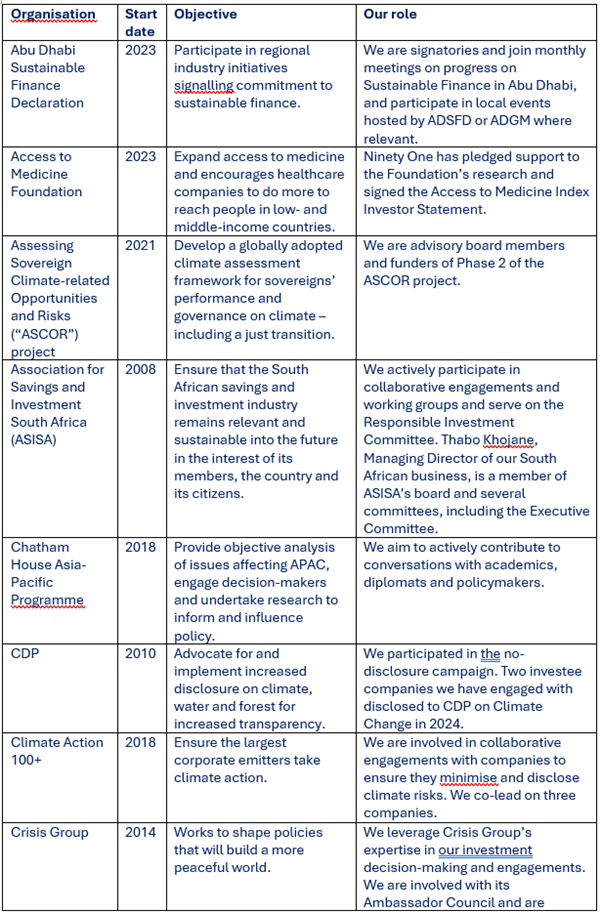
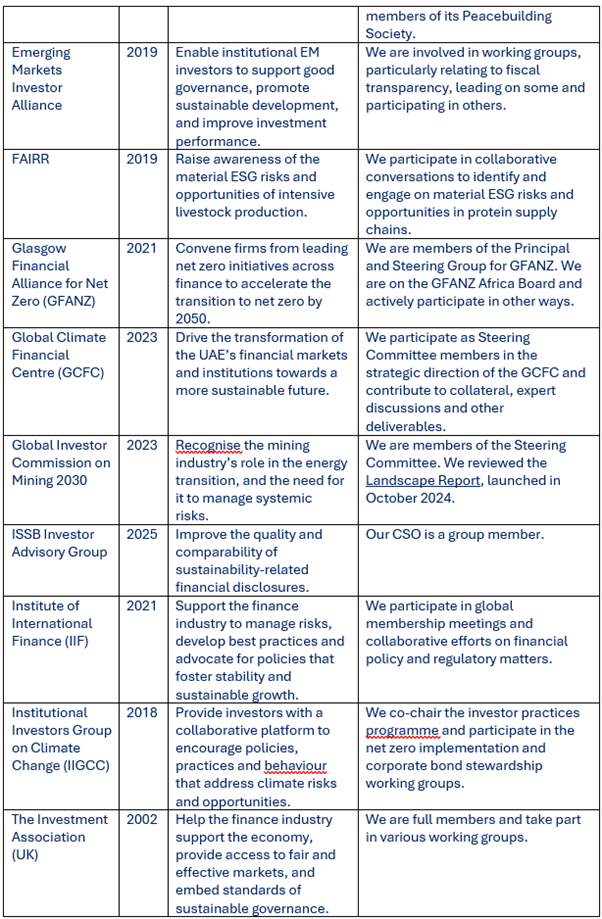
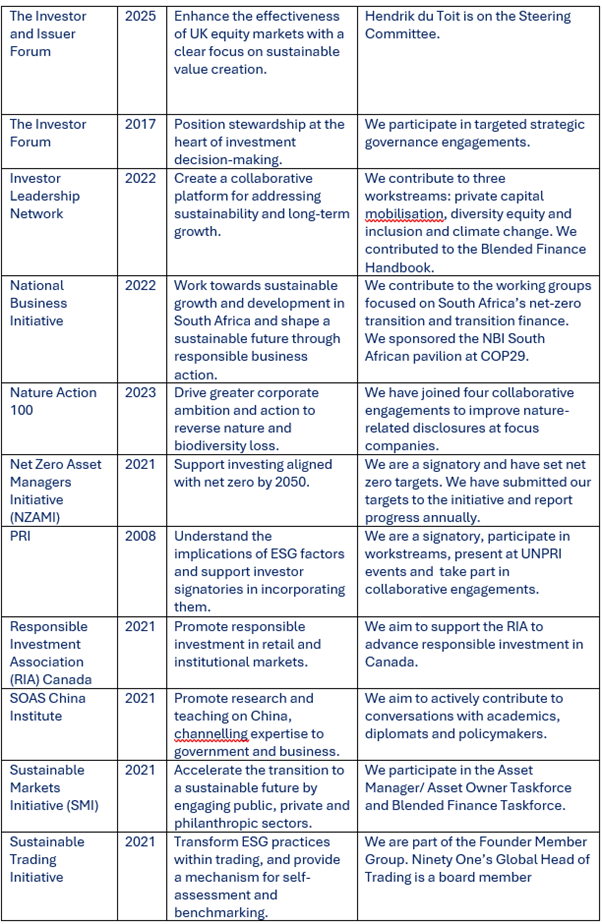
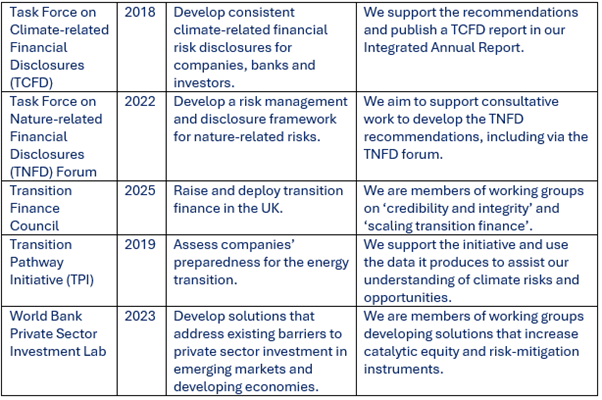
We seek to contribute meaningfully to the conversation on sustainability and to encourage a deeper focus on sustainability-related issues in all of the jurisdictions where we invest, always to the benefit of our clients and their long-term investment outcomes. We may collaborate with other investors as part of an engagement strategy if it can contribute to achieving our engagement objectives and can help address the relevant risks. . Our membership of regional and global organisations facilitates this.
The table below details our firmwide collaborative partnerships and our role:
Dialshifter
This fund is helping to ‘shift the dial from brown to green’ by…
… investing in companies with sustainable drivers that are helping to build a better world. Our investment philosophy is focused on pricing positive and negative externalities better than the market, meaning the fund invests in businesses that can deliver sustainable structural growth by providing solutions to sustainability challenges, and can effectively manage sustainability risks. Central to this is carbon reduction in line with the Paris Agreement; all companies we own must have verified science-based targets by 2030 and a large proportion of the portfolio is invested in companies providing decarbonization solutions across renewable energy, electrification and resource efficiency pathways.
SDR Labelling:
Sustainability Impact label
Key Performance Indicators:
The Investment Manager identifies and measures a key performance indicator (KPI) which represents the number or value of products and/or services provided, volume of resource benefit, or the number of people made more resilient in areas at high risk of extreme weather events or long-term climate or pollution impacts, particularly those in low and middle-income regions, who are disproportionately affected by these challenges. For example, a provider of flood insurance products that enable those at greater risk of flooding to protect the value of their homes may be measured by the number of individuals purchasing the insurance policies or ‘Water saved’ represents the quantity of water recycled and treated by a company’s products to help customers safeguard precious water resources by holistically addressing water safety and scarcity.
Fund Holdings
Voting Record
Disclaimer
Important information
The personal information contained in this document is confidential, and only for the information of the intended recipient.
This communication for professional investors and financial advisors only. It is not to be distributed to retail customers who are resident in countries where the Fund is not registered for sale or in any other circumstances where its distribution is not authorised or is unlawful. Please visit www.ninetyone.com/registrations to check registration by country.
The information may discuss general market activity or industry trends and is not intended to be relied upon as a forecast, research or investment advice. There is no guarantee that views and opinions expressed will be correct. The investment views, analysis and market opinions expressed may not reflect those of Ninety One as a whole, and different views may be expressed based on different investment objectives. Ninety One has prepared this communication based on internally developed data, public and third party sources. Although we believe the information obtained from public and third party sources to be reliable, we have not independently verified it, and we cannot guarantee its accuracy or completeness (ESG-related data is still at an early stage with considerable variation in estimates and disclosure across companies. Double counting is inherent in all aggregate carbon data). Ninety One’s internal data may not be audited. Ninety One does not provide legal or tax advice. Prospective investors should consult their tax advisors before making tax-related investment decisions.
The Funds are sub-fund of the Ninety One Funds Series range (series i - iv) which are incorporated in England and Wales as investment companies with variable capital. Ninety One Fund Managers UK Ltd (registered in England and Wales No. 2392609 and authorised and regulated by the Financial Conduct Authority) is the authorised corporate director of the Ninety One Funds Series range.
This communication is not an invitation to make an investment, nor does it constitute an offer for sale. Any decision to invest in the Fund should be made only after reviewing the full offering documentation, including the Key Investor Information Documents (KIID) and Prospectus, which set out the fund specific risks. Fund prices and copies of the Prospectus, annual and semi-annual Report & Accounts, Instruments of Incorporation and the Key Investor Information Documents may be obtained from www.ninetyone.com.
Daily transactional data is not available to fund investors. Transparency around transactions costs is available to investors via PRIIPs and MiFID methodologies.
THIS INVESTMENT IS NOT FOR SALE TO US PERSONS.
Except as otherwise authorised, this information may not be shown, copied, transmitted, or otherwise given to any third party without Ninety One’s prior written consent. © 2025 Ninety One. All rights reserved. Issued by Ninety One, May 2025.
Indices
Indices are shown for illustrative purposes only, are unmanaged and do not take into account market conditions or the costs associated with investing. Further, the manager’s strategy may deploy investment techniques and instruments not used to generate Index performance. For this reason, the performance of the manager and the Indices are not directly comparable.
If applicable MSCI data is sourced from MSCI Inc. MSCI makes no express or implied warranties or representations and shall have no liability whatsoever with respect to any MSCI data contained herein. The MSCI data may not be further redistributed or used as a basis for other indices or any securities or financial products. This report is not approved, endorsed, reviewed or produced by MSCI. None of the MSCI data is intended to constitute investment advice or a recommendation to make (or refrain from making) any kind of investment decision and may not be relied on as such.
If applicable FTSE data is sourced from FTSE International Limited (‘FTSE’) © FTSE 2025. Please note a disclaimer applies to FTSE data and can be found at www.ftse.com/products/downloads/FTSE_Wholly_Owned_Non-Partner.pdf
Targeted or projected performance returns
These are based on Manager’s good faith estimate of the likelihood of the performance of asset classes under current market conditions. There can be no assurances that any investment will generate such returns, that any client or investor will achieve comparable results or that the manager will be able to implement its investment strategy. Actual performance may be adversely affected by a variety of factors, beyond the manager’s control, such as, political, and socio-economic events, adverse changes in the interest rate environment, changes to investment expenses, and a lack of suitable investment opportunities. Accordingly, target returns and expected results may change over time and may differ from previous reports. Additional and supporting information is available upon request.
Hypothetical performance results shown are backtested and do not represent the performance of any account, fund or strategy managed by Ninety One but were achieved by means of the retroactive application, certain aspects of which may have been designed with the benefit of hindsight. The hypothetical back-tested performance does not represent the results of actual trading using client assets nor decision-making during the period and does not and is not intended to indicate the past performance or future performance of any account or investment strategy. If actual accounts had been managed throughout the period, ongoing research might have resulted in changes to the strategy which might have altered returns. The actual performance of any account or investment strategy managed by Ninety One will differ, perhaps materially, from the hypothetical back-tested performance results shown herein. Additional and supporting information is available upon request.
This communication includes results which are not historical or actual in nature but are hypothetical illustrations involving modelling components and assumptions that are required for purposes of such hypothetical illustrations. No representations are made as to the accuracy of such hypothetical illustrations or that all assumptions relating to such hypothetical illustrations have been considered or stated or that such hypothetical illustrations will be realized. Actual events are difficult to predict and are beyond the Firm’s control. Actual events may be different, perhaps materially, from those assumed. No investor or client of the Firm has actually experienced the hypothetical results presented. Additional and supporting information is available upon request.
There is no assurance that the persons referenced herein will continue to be involved with investing assets for the Manager, or that other persons not identified herein will become involved at any time without notice. References to specific and periodic team meetings are not guaranteed to be held or fully attended due to reasonable priority driven circumstances and holidays.
Any description or information regarding investment process is provided for illustrative purposes only, may not be fully indicative of any present or future investments and may be changed at the discretion of the manager without notice. References to specific investments, strategies or investment vehicles are for illustrative purposes only and should not be relied upon as a recommendation to purchase or sell such investments or to engage in any particular Strategy. Portfolio data is expected to change and there is no assurance that the actual portfolio will remain as described herein. There is no assurance that the investments presented will be available in the future at the levels presented, with the same characteristics or be available at all. Past performance is no guarantee of future results and has no bearing upon the ability of Manager to construct the illustrative portfolio and implement its investment strategy or investment objective.
References to particular investments or strategies are for illustrative purposes only and should not be seen as a buy, sell or hold recommendation. Such references are not a complete list and other positions, strategies, or vehicles may experience results which differ, perhaps materially, from those presented herein due to different investment objectives, guidelines, or market conditions. The securities or investment products mentioned in this document may not have been registered in any jurisdiction. More information is available upon request.
| Fund Name | SRI Style | SDR Labelling | Product | Region | Asset Type | Launch Date | Last Amended |
|
|---|---|---|---|---|---|---|---|---|
Ninety One Global Sustainable Equity Fund |
Sustainability Tilt | Sustainability Impact label | OEIC | Global | Equity | 27/03/2001 | Jul 2025 | |
ObjectivesThe Fund invests primarily (at least two-thirds and typically substantially more) in the shares of companies which the Investment Manager believes contribute to positive environmental change through sustainable decarbonisation (the process of reducing carbon dioxide emissions).
|
Fund/Portfolio Size: £239.00m (as at: 31/03/2025) Total Screened Themed SRI Assets: £4024.00m (as at: 31/03/2025) Total Responsible Ownership Assets: £126757.00m (as at: 31/03/2025) Total Assets Under Management: £130781.00m (as at: 31/03/2025) ISIN: GB00B01VDL32 |
|||||||
Sustainable, Responsible &/or ESG OverviewThe Ninety One Global Sustainable Equity strategy is a global active bottom-up and benchmark agnostic strategy focused on identifying Sustainability Leaders - companies that will benefit from a more sustainable future. We focus on assessing company externalities (the impact companies have on the environment, society and employees) as a way to identify Sustainability Leaders. We also incorporate an appraisal of corporate culture into our investment process with a view to finding those companies thinking long-term about their businesses and have what it takes to be Sustainability Leaders into the future. We combine these externalities and corporate-culture assessments with a disciplined investment approach to select companies with enduring competitive advantages at attractive market valuations. |
||||||||
|
Primary fund last amended: Jul 2025 |
||||||||
|
Information received directly from Fund Manager |
||||||||
|
Please select what you would like to read:
Fund FiltersSustainability - General
Sustainability policy
Has policies that consider (environmental and social) sustainability issues. Strategies vary but are likely to consider environmental issues like climate change, carbon emissions, biodiversity loss, resource management, environmental impacts; and social issues like equal opportunities, human rights, labour standards, diversity and adherence to internationally recognised codes. See individual entry information.
Encourage more sustainable practices through stewardship
Aim to encourage higher sustainability standards through responsible ownership / stewardship / engagement / voting activity
UN Global Compact linked exclusion policy
Use the UN Global Compact to inform or help direct where they can or cannot invest. Will typically not invest in companies with significant breaches (low standards) - strategies vary. (The UNGC covers a wide range of issues - search 'UNGC'). See https://unglobalcompact.org/
Report against sustainability objectives
Publicly report performance against named sustainability objectives Environmental - General
Environmental policy
Has policies which relate to environmental issues. These will typically set out their stance on issues such as pollution, climate change, resource management, biodiversity loss, carbon emissions, plastics and/or additional environmental impacts. Strategies vary.
Resource efficiency policy or theme
Has a policy or theme that relates to managing natural resources more efficiently. Strategies vary. See individual entry information.
Favours cleaner, greener companies
Aims to invest in companies with strong or market leading environmental policies and practices. Strategies vary. See individual entry information for more detail.
Waste management policy or theme
Has a written policy or theme focused on waste management - typically to support or encouraging higher levels of recycling and better efficiency / reducing waste. Strategies vary. Nature & Biodiversity
Biodiversity / nature policy
Has a written biodiversity policy or theme typically aimed at supporting, encouraging and improving environmental protection and safeguarding the natural world (sometimes referred to as 'natural capital'). See eg https://www.un.org/en/climatechange/science/climate-issues/biodiversity Climate Change & Energy
Coal, oil & / or gas majors excluded
Avoid investment in major coal, oil and/or gas (extraction) companies. Strategies vary.
Fracking & tar sands excluded
Avoid companies involved in fracking and tar sands - which are widely regarded as controversial methods of oil and gas extraction. Strategies vary.
Arctic drilling exclusion
Avoid companies that are involved in extracting oil from the Arctic regions.
Fossil fuel reserves exclusion
Avoid investing in companies / assets with coal, oil and gas reserves. See individual entry information for further details.
Clean / renewable energy theme or focus
Invest (or may invest) in clean / renewable energy companies and other assets. The proportion directly or indirectly invested in renewable energy may vary over time.
Encourage transition to low carbon through stewardship activity
Encourage the transition to lower carbon activities through asset selection and / or responsible ownership activity.
Energy efficiency theme
Has an energy efficiency theme - typically meaning that the manager is focused on investing in organisations that manage - or help others to manage - energy use more carefully and less wastefully - and so reduce greenhouse gas emissions.
Invests in clean energy / renewables
Invest in renewable energy companies and / or companies where renewable energy is a significant part of their business. Strategies vary.
Hydrogen policy or theme
Has a policy or theme which sets out their position on investment in companies researching/developing hydrogen as an energy solution.
Fossil fuel exploration exclusion - direct involvement
Excludes companies and other assets with direct involvement in fossil fuel exploration (eg coal, oil and gas companies)
Require net zero action plan from all / most companies
Requires all, or most of, the assets they invest in to have a ‘net zero action plan’ - describing how they will reduce their greenhouse gas emissions. Social / Employment
Favours companies with strong social policies
Aims to invest in assets with high social values - this may include strong human rights, labour standards and equal opportunities or safety related practices.
Health & wellbeing policies or theme
Has policies or themes that set out their approach to health and wellbeing issues, typically aims to invest in companies with high standards - or encourage high standards.
Diversity, equality & inclusion Policy (product level)
Has a written diversity policy – where the manager will aim to select companies with a carefully considered, positive employment standards. This may cover a range of issues including gender, ethnicity, disability, beliefs and sexual orientation. Ethical Values Led Exclusions
Tobacco & related product manufacturers excluded
Companies are excluded if they are involved in any aspect of the production chain for tobacco products, including cigarettes, vaping, e-cigarettes, chewing tobacco and cigars.
Tobacco & related products - avoid where revenue > 5%
Companies are excluded if they make more than 5% of their revenue from the manufacture, sale or distribution of tobacco products including cigarettes, vaping, e-cigarettes, chewing tobacco and cigars.
Controversial weapons exclusion
Excludes companies which make controversial weapons such as landmines, cluster munitions and chemical weapons.
Armaments manufacturers avoided
Avoids companies that manufacture weapons intended specifically for military use. Strategies vary - may or may not include non-strategic military products.
Civilian firearms production exclusion
Has a written civilian firearms exclusion policy - meaning that they will not invest in companies that make (or perhaps also sell) handguns made for non-military users. Meeting Peoples' Basic Needs
Water / sanitation policy or theme
Have policies or themes that set out the position on investment in the water sector and/or sanitation. Strategies vary.
Healthcare / medical theme
Healthcare and or medical theme or area of investment - may have a single or many themes Gilts & Sovereigns
Does not invest in sovereigns
Does not invest in / excludes 'sovereigns' - debt issued by governments. See eg https://www.investopedia.com/terms/s/sovereign-debt.asp Banking & Financials
Invests in banks
Can include banks as part of their holdings / portfolio.
Invests in insurers
May invest in insurance companies. Governance & Management
Avoids companies with poor governance
Avoids investing in companies with poor governance practices.(e.g. board structure, management practices etc.) Views may however vary on what counts as 'poor' practices - and funds may not immediately divest as they may prefer to work to encourage higher standards.
UN sanctions exclusion
Exclude companies that are subject to United Nations sanctions. See eg https://main.un.org/securitycouncil/en/content/un-sc-consolidated-list
Encourage board diversity e.g. gender
Encourage the companies they invest in to have more diverse board structures (e.g. more women on boards)
Encourage higher ESG standards through stewardship activity
Aim to encourage higher ESG standards through responsible ownership / stewardship / engagement /voting activity Product / Service Governance
ESG integration strategy
Find fund / asset managers that factor in 'environmental, social and governance' issues as part of their investment decision making process. A focus on 'ESG' typically means a fund is carrying out additional research to help reduce ESG related risks. It does not necessarily mean a focus on sustainability. Strategies vary. See fund literature. Asset Size
Over 50% large cap companies
Invests more than half of their money into what are commonly regarded as 'large companies'. This will typically mean that the market capitalisation (or value) of the companies they hold is in excess of £5 to £10 billion.
Invests mostly in large cap companies / assets
Invests mainly in larger companies / assets. (e.g. over circa £5-£10bn) Targeted Positive Investments
Invests >25% in environmental / social solutions companies
Invests >25% of their capital in companies where a major part of their business is focused on helping to address environmental or social challenges.
Invests >50% of fund in environmental / social solutions companies
Invests >50% of their capital in companies where a major part of their business is focused on helping to address environmental or social challenges.
EU Sustainable Finance Taxonomy holdings 5-25% of assets
Invests in between 5-25% of capital in assets which meet the EU Taxonomy requirements. This will typically require adding up the proportion of each individual company's activity that is regarded as 'green' so that the manager can produce an overall total for the whole fund or portfolio. Impact Methodologies
Aims to generate positive impacts (or 'outcomes')
Has policies that aim to help or support the delivery of positive social or environmental impacts (or societal/real world outcomes) by investing in companies they regard as beneficial to people and / or the planet. Strategies vary.
Measures positive impacts
Aims to measure the positive real world environmental and / or social benefits that are associated with their investment strategy. Investments that aim to deliver positive impacts and measure those impacts may be referred to as 'Impact' - although impact measurement is not restricted to Impact investments. Strategies vary.
Described as an ‘impact investment’
Investments which are specifically marketed as ‘Impact investments' and work to deliver both financial performance and specific, measurable positive, real world social and/or environmental benefits. Strategies vary.
Positive environmental impact theme
Specifically sets out to help deliver positive environmental impacts, benefits or 'real world' outcomes.
Positive social impact theme
Specifically states that they aim to deliver positive social (i.e. people related) impacts and/or outcomes.
Invests in environmental solutions companies
Directs investment towards companies where a major part of their business is about solving environmental challenges. e.g. companies helping to address climate change.
Invests in social solutions companies
Invest in companies where a major part of their business is specifically aimed at helping to address social challenges. e.g. companies helping to address poverty.
Invests in sustainability / ESG disruptors
Specifically sets out to invest in companies that are regarded as 'disrupting' existing business practices - typically through the development of innovative (sustainability aware) products and/or practices.
Aim to deliver positive impacts through engagement
Aims to deliver positive environmental and or social impacts (real world benefits) through its engagement with investee assets
Over 50% in assets providing environmental or social ‘solutions’
Invests more than 50% of capital in assets which are regarded as being significantly focused on providing solutions to environmental or social challenges. Strategies vary.
Publish ‘Theory of Change’ explanation
Policy explains the ways in which the manager believes things need to change in order to deliver a more sustainable future, which they are working to help achieve. How The Fund/Portfolio Works
Positive selection bias
Focuses on finding and investing in companies with positive / beneficial attributes. This strategy can be applied in addition to exclusion criteria and engagement/stewardship activity. Unscreened Assets & Cash
Assets typically aligned to sustainability objectives 70 - 79%
Holds between 70-79% of assets which align to the sustainability objectives; which are not being held purely for risk management purposes, such as derivatives and cash equivalent assets.
Assets typically aligned to sustainability objectives 80 – 89%
Holds between 80-89% of assets which align to the sustainability objectives; which are not being held purely for risk management purposes, such as derivatives and cash equivalent assets.
Assets typically aligned to sustainability objectives > 90%
Holds at least 90% of assets which align to the sustainability objectives; which are not being held purely for risk management purposes, such as derivatives and cash equivalent assets. Intended Clients & Product Options
Intended for clients interested in sustainability
Designed to meet the needs of individual investors with an interest in sustainability issues.
Intended for clients who want to have a positive impact
Designed to meet the needs of individual investors with an interest in ‘Impact investment’ which help or support the delivery of positive social or environmental impacts (or societal/real world outcomes) by investing in companies regarded as beneficial to people and / or the planet. Strategies vary. Labels & Accreditations
SDR Labelled
Find options that have chosen to adopt one of the Financial Conduct Authority (FCA) SDR labels. Please note: there are a range of reasons why potentially relevant options may not use an SDR label eg. adopting a label may be work in progress, the manager may not yet be allowed to do so because of the product type, a manager may feel they are insufficiently aligned to SDR requirements.
ACT signatory
A voluntary corporate culture standard for investment managers, see https://www.investorsact.com/ - City Hive Fund Management Company InformationAbout The Business
Responsible ownership / stewardship policy or strategy (AFM companywide)
Finds fund / asset management companies that have a published company wide stewardship, engagement and / or responsible ownership policy or strategy that covers all investments. Stewardship typically involves encouraging higher ESG standards through voting and dialogue.
ESG / SRI engagement (AFM companywide)
Find fund / asset management companies that actively encourage higher 'environmental, social and governance' and / or 'sustainable and responsible investment' practices across investee companies - typically where the aim is to encourage positive change that is aligned with the best interests of investors. Strategies vary. See additional information and options.
Vote all* shares at AGMs / EGMs (AFM companywide)
Find fund / asset managers that vote all* the shares they own at Annual General Meetings and Extraordinary General Meetings. A commitment to voting shares is a key indicator of 'responsible share ownership' demonstrating their support for or disagreement with management policy. (*situations can legitimately, occasionally occur where voting proves impossible, but in principle all shares should be voted.)
Responsible ownership / ESG a key differentiator (AFM companywide)
Find fund / asset managers that consider responsible ownership and ESG to be a key differentiator for their business.
Senior management KPIs include environmental goals (AFM companywide)
The leadership team of this fund / asset manager have performance targets linked to environmental goals.
SDG aligned aims / objectives (AFM companywide)
Find fund / asset management companies that aim to align all their investments (across all funds) to help meet the aims of the UN Sustainable Development Goals.
Responsible ownership policy for non SRI / sustainable options (AFM companywide)
Find options run by managers that apply Responsible ownership or 'Stewardship' policies to all or most of their investment assets. This means active involvement (e.g. voting, dialogue) with the companies across all or most funds, products and services.
Integrates ESG factors into all / most research (AFM companywide)
Find fund / asset management companies that consider environmental, social and governance (ESG) issues when deciding whether or not to invest in a company for all / almost all of their funds and other assets. This is increasingly seen as part of sound risk management.
In-house diversity improvement programme (AFM companywide)
Finds organisations / fund managers that have an in-house (company wide) diversity improvement programme - meaning that they are working to ensure that within their own businesses they employ people from diverse backgrounds - often typically focused on ethnicity and/or sex.
Invests in new sustainability linked bond issuances (AFM companywide)
Fund / asset management company has investments in bonds designed to meet sustainability requirements - however these assets may not be 'ringfenced' for this purpose. See website for details.
Offer structured intermediary sustainable investment training
Fund management entity offers unstructured intermediary training on sustainable investment (ie for financial advisers and wealth managers) Collaborations & Affiliations
PRI signatory
Find fund / asset management companies that have signed up to the UN backed 'Principles of Responsible Investment'.
TNFD forum member (AFM companywide)
A member of the Taskforce for Nature Related Financial Disclosures group which aims to aid risk management and shift money towards nature-positive outcomes.
Investment Association (IA) member
Fund management entity is a member of the Investment Association https://www.theia.org/ Resources
In-house responsible ownership / voting expertise
Find fund / asset management companies that employ people to steer and support fund managers in voting shares at company AGM's and EGMs in ways that are consistent with encouraging higher ESG/sustainability standards.
Employ specialist ESG / SRI / sustainability researchers
Find a fund / asset management company that directly employs specialist ESG/SRI/sustainability researchers or analysts. This allows asset managers to discuss environmental, social and governance risks and opportunities directly with companies.
Use specialist ESG / SRI / sustainability research companies
Find fund / asset management companies that makes use of expert external research companies. This can help deliver specialist expertise and means resources are pooled with other investors.
ESG specialists on all investment desks (AFM companywide)
Finds organisations / fund managers that have one or more ESG/sustainability experts on all investment teams or 'desks' (all asset types) Accreditations
PRI A+ rated (AFM companywide)
Finds organisations / fund managers that have an A+ PRI rating - meaning they are highly rated according to the 'Principles of Responsible Investment'
UK Stewardship Code signatory (AFM companywide)
Find fund / asset managers that are signatories to the FRC UK Stewardship Code, which sets out a framework for constructive investor / investee relations where managers are encouraged to behave like responsible, typically longer term 'company owners'. Engagement Approach
Regularly lead collaborative ESG initiatives (AFM companywide)
Find fund / asset management companies that regularly initiate or run industry wide (collaborative) investor projects aimed at raising environmental, social and governance standards amongst investee companies.
Engaging on climate change issues
Fund / asset manager has stewardship /responsible ownership strategy that is focused on addressing climate change with investee assets.
Engaging with fossil fuel companies on climate change
Fund / asset manager has a stewardship /responsible ownership strategy that involves working with fossil fuel companies on climate change related issues. See fund manager website for details.
Engaging to reduce plastics pollution / waste
Fund / asset manager has stewardship /responsible ownership strategy with involves encouraging investee asset to reduce plastic waste and pollution.
Engaging to encourage responsible mining practices
Fund / asset manager has a stewardship / responsible ownership policy that means they are working to encourage more responsible mining practices - where environmental and social issues are properly dealt with by the companies they invest in.
Engaging on biodiversity / nature issues
The fund / asset manager has a responsible ownership / stewardship strategy that focuses on biodiversity and nature issues relating to the assets they invest the aim of which will be to reduce harm and or deliver improvement. Strategies vary. https://tnfd.global
Engaging to encourage a Just Transition
Fund / asset manager has a responsible ownership / stewardship strategy which means they are working to encourage the shift to more sustainable business practices in ways that respect and are sensitive to social issues and the impact change has on people effected by the changes that are taking place. https://www.transitionpathwayinitiative.org/ https://transitiontaskforce.net/
Engaging on human rights issues
Fund / asset manager has responsible ownership / stewardship strategy in place which aims to address human rights issues in investee companies (and potentially their suppliers) with the aim of raising standards
Engaging on labour / employment issues
Fund / asset manager has responsible ownership / stewardship strategy in place that aims to improve labour standards for the benefit of employees in investee companies (and potentially their suppliers)
Engaging on diversity, equality & / or inclusion issues
Fund / asset management company has a stewardship strategy in place which involves working to raise diversity, equality and inclusion standards across investee assets
Engaging to stop modern slavery
Fund / asset manager is working with the assets they hold to help stamp out modern slavery - where direct or indirect company employees are exploited for business benefits.
Engaging on governance issues
Fund / asset managers have stewardship strategies in place that focus on improving governance standards across investee assets
Engaging on responsible supply chain issues
Has a stewardship / responsible ownership strategy that encourages responsible supply chain - ie the managers will discuss environmental, social and governance issues with investee companies with the aim of raising standards
Stewardship escalation policy
Escalation policies describe how a manager will proceed if stewardship / engagement activity is not successful in the short term. Company Wide Exclusions
Controversial weapons avoidance policy (AFM companywide)
Find fund / asset management companies (not funds) that avoid investment in 'controversial weapons' across all of their funds and other investment vehicles. Climate & Net Zero Transition
Net Zero commitment (AFM companywide)
Fund / asset management organisations that have pledged to reduce their greenhouse gas emissions to ‘net zero’. Strategies vary - this area is changing rapidly.
Voting policy includes net zero targets (AFM companywide)
Fund / asset manager AGM / EGM voting strategy has processes in place that mean they will normally be expected to vote in a way that will encourage the transition to net zero greenhouse gas emissions.
Net Zero - have set a Net Zero target date (AFM companywide)
This fund / asset management company has set a date by which they plan to achieve net zero greenhouse gas / CO2e emissions.
Encourage carbon / greenhouse gas reduction (AFM companywide)
Find fund / asset management companies that are working with the companies they invest in to encourage reductions in carbon dioxide and other greenhouse gas emissions.
Carbon transition plan published (AFM companywide)
Finds organisations / fund managers that have a company wide carbon transition plan - meaning that they have plotted a path to how they will move away from activities that produce or use carbon based energy sources (that emit greenhouse gases) towards clean, alternative, renewable energy sources.
‘Forward Looking Climate Metrics’ published / ITR (AFM companywide)
Finds organisations / fund managers that have published ‘forward looking climate metrics’ e.g. 'implied temperature rise' data that are a total of the asset management company's share (% owned) of all the investee company emissions of the assets they manage, as well as their own direct and other indirect emissions.
Carbon offsetting - offset carbon as part of net zero plan (AFM companywide)
This fund / asset management company plans to achieve net zero greenhouse gas (CO2e) emissions with the help of a scheme that will lock away an amount of carbon that is equivalent to the company’s own emissions – so that the end result is ‘net zero’. Calculations and scope vary.
In-house carbon / GHG reduction policy (AFM companywide)
Find fund / asset management companies that are working to reduce their own (fund management company) carbon/greenhouse gas emissions. Transparency
Publish responsible ownership / stewardship report (AFM companywide)
Find fund / asset management companies that publish a report detailing their responsible investment ownership - also known as 'Stewardship' - activity.
Full stewardship / responsible ownership policy information on company website
Find fund / asset management companies that publish information about their sustainable and responsible investment strategies on their company website.
Just Transition policy on website (AFM companywide)
This fund / asset management company has published information on their website about the delivery of a 'just transition' - ie the delivery of the necessary shift to a sustainable future that takes full account of social implications - how change effects people. See eg https://www.unepfi.org/social-issues/just-transition/ or LSE Grantham
Publish full voting record (AFM companywide)
Fund / asset management companies that publish a full record of how they vote their shares at AGMs (annual general meetings) and EGMs (extraordinary general meetings). Voting strategies have an important role to play encouraging higher environmental, social and governance standards.
Sustainability transition plan publicly available (AFM companywide)
This fund / asset management company has published a plan that explains how they are to become a sustainable business - without significant negative environmental or social impacts.
Paris Alignment plan publicly available (AFM companywide)
This fund / asset management company has published a plan that explains how they will align to the climate change commitments made at the Paris Climate Talks, COP21.
Net Zero transition plan publicly available (AFM companywide)
This fund / asset management company has published a plan that explains how they are going to achieve net zero greenhouse gas / CO2e emissions. CommentsPlease note:
Sustainable, Responsible &/or ESG Policy:The Strategy places ESG analysis and criteria at the heart of its investment decisions, embedding it within all steps of our investment process. We view ESG criteria as a component of both risk and opportunity, and we seek to avoid those businesses with significant negative ESG exposure and allocate capital to those with positive ESG exposure. We screen for ESG elements in our universe screen, we rank for sustainability indicators in our idea generation phase, and our fundamental analysis approach dives deep on all ESG and sustainability considerations, using our proprietary Capitals Framework to assess externalities and sustainable opportunities, and capturing these insights directly into our internally built and maintained company models. Our portfolio construction process aims to create a balance between the identified ESG opportunities, and our engagement and reporting processes place transparency, ESG-relevancy, and sustainability at the centre.
We use this framework to analyse those points of interaction between companies and the society and environments they operate in, and evaluate their magnitude, materiality, and importance (how they may influence a company’s return potential). Our Capitals Framework ultimately allows us to identify Sustainability Leaders. Features of the framework:
The strategy employs a bespoke bottom-up investment process designed specifically for the relevant diverse universe of global equities that are best positioned to capture the long-term secular growth opportunities arising from the shift towards sustainability. We look to identify companies providing solutions to sustainability challenges where the corporate sector plays a key role, and which have significant potential for long-term, structural growth. We have developed methodologies to identify companies that we believe are genuinely providing sustainable solutions to unmet needs across six structural growth areas:
The investment process incorporates proprietary models, such as our sustainable revenues screen, our detailed company-level fundamental financial and risk modelling and corporate culture assessment, but ultimately relies on our qualitative decisions. This structured and disciplined investment process is designed to efficiently focus analysts’ time on the deep fundamental research of a shortlist of companies that make it through our universe filter and idea generation, to identify businesses with sustainable drivers of structural growth, competitive advantages, and sustainable returns. The portfolio is then constructed from the bottom-up, based on the level of conviction in each position. Ongoing management and monitoring of holdings are intrinsically linked with our engagement work and active stewardship. Process:The five defined stages to the investment process are described in further detail below:
The investment team constructs a sustainable investment universe by screening for companies with more than 50% of revenues across one or more of the Bloomberg Industry Classification Standards (BICS) categories we believe align to sustainability challenges. These companies have the potential to capture the long-term secular growth opportunities arising from the shift towards a more sustainable future. It is important to think not just about the direct beneficiaries of this sustainable transition, but the entire related supply chains that need to be built up. The universe comprises ~5,000 companies across sectors, regions, and market capitalisations. The investment team also filters based on our defined set of externalities and research- driven exclusions; these are not ethically or morally derived exclusions. These can be found on our website here.
The main source of idea generation is a ranking of the resultant universe based on key financial, sustainability and competitive advantage metrics that reflect the structural growth, competitive advantage, and sustainable return characteristics that we seek in businesses. The ranking stimulates team debate, whilst analyst experience and knowledge enable a qualitative overlay to broaden the idea pool as appropriate. The metrics chosen derives from decades of investment team and firm-wide experience as well as rigorous back-testing and relevant cross-sector analysis. This screen directs analyst research, which can then lead to further qualitative idea generation. We have also integrated an internal sustainability indicator into this part of the process. This indicator assesses companies across various sustainability and ESG factors that we've identified as being likely to have a financial impact on a company, with each company appraised relative to its sector. Once a company screens to be included in stage three (Fundamental Analysis), we perform our own sustainability analysis of the company. This is an integral part of the investment process as we believe that companies with strong sustainability characteristics, focused on minimising their negative externalities, can outperform over time.
Once a company comes through our idea generation screen, we move it to the next stage of the investment process where the team conducts the fundamental analysis to identify whether sustainability factors and competitive advantages are underpriced by the market. The first stage of our fundamental analysis process is focused on the company’s business model and whether it fits with our requirement for structural growth, sustainable returns and competitive advantage. At this stage we also carry out our own sustainability analysis by assessing the externalities generated by the company. When we are comfortable that the company fulfils our requirement and there are no material sustainability risks, we take it forward to a second, more detailed stage of fundamental analysis. We also conduct detailed fundamental analysis of sub-sectors and technologies exposed to the sustainable structural growth areas that we invest in. This helps us to inform and stress test our company models. See our paper “A sustainable investment edge” for more details on the structural growth we expect to see from these areas. a) Company analysis and understanding on structural growth opportunity The investment team works through a rigorous checklist for each investment idea. We want to find the best companies in our universe which are intrinsically undervalued. The team conducts fundamental analysis by constructing detailed models. We build sustainability insights directly into our financial models, enabling us to construct portfolios of companies where the sustainable investment case is underappreciated by the market and where we therefore expect sustainability to be a driver of long-term alpha. Using our proprietary Capitals Framework, we assess companies qualitatively and quantitatively through a lens that incorporates relevant stakeholders, to evaluate how a company’s impacts on its stakeholders are likely to influence its growth and return potential. b) Competitive advantage Market participants systematically underestimate the quantum and persistence of returns in cases where businesses have sustainable long-term competitive advantages. This results in exploitable inefficiencies. Our competitive advantage analysis can be simplified by answering the key questions/topics shown below:
We use these competitive advantage factors to determine the long-term sustainability of the business in question. In addition, we believe a strong balance sheet and outstanding management are also a competitive advantage and ensure we cover these factors during our fundamental analysis. We pay particular attention to having an informed perspective of the competitive advantage period and how that translates into the sustainable margin, cash flow generation and/or economic value added. Culture is an aspect of a company’s competitive advantage that we believe is often poorly understood by investors as it is challenging to evaluate, and consequently may be mispriced – suggesting an opportunity for active investors. We only buy a stock when we have made a culture assessment of a company, using our bespoke corporate-culture framework. This framework draws on insights from company meetings, academic collaborations, expert-network access and employee resources. The framework was developed from a collaborative research project between Ninety One’s Investment Institute and Alex Edmans, Professor of Finance at London Business School. For more information on our corporate culture work, refer to our paper “Culture as a driver of sustainable alpha”. The goal of this step is to identify areas of competitive advantage often overlook and mispriced. We believe all of this analysis helps us to identify companies that can create value by generating a return on investment. c) Return profile and growth It is important to note that profitable growth and efficient use of capital is embedded within each of the above calculations. Structural growth and sustainable returns are two key drivers of our stock selection and analysis. We believe growth and compounding characteristics are key factors in determining a reasonable fair value for any company. In compounders, we are looking for enduring competitive advantages and companies with a durable and resilient outlook. We therefore do not claim to be only growth or only value investors, instead we invest in the leading companies within our universe where we believe there is underappreciated value. d) Valuation The team conducts full financial and valuation analysis by constructing individual company models to determine the growth, earning, cash generation, and intrinsic value of the companies under review. Our proprietary equity models are maintained within the team and contain our own forecasts which embed our sustainability insights both on the impact opportunity side as well as from a risk and negative externality perspective. Research from earlier parts of the process is used and built on here. In undertaking full income statement, cashflow statement and balance sheet analysis we can focus on specific financial metrics which we believe to be the drivers of long-term returns. The output of the equity analysis is a target price for the company across different scenarios. The target price is based on three main components with returns and cash flow being prioritised:
e) Management, sustainability, and engagement assessment Capital allocation decisions and operational performance are important considerations for us when evaluating management. Much of these considerations feed into our competitive advantage and valuation work. We also place huge significance on sustainability factors as highlighted in our initial screens. Sustainability reports and net zero emissions targets are important throughout our fundamental analysis as well as topics featuring in team debates. This fundamental bottom-up research stage of the investment process also includes company meetings and onsite visits where we will focus on all the key factors mentioned above. We will only buy a stock for the portfolio after we have met with company management. When all factors described above score positively for an investment idea, we will add it to our list of best ideas and compare to the existing holdings.
The portfolio is constructed from the bottom-up in a benchmark-agnostic fashion, using the best ideas1 from previous stages of the investment process. We take an absolute contribution to risk-based approach to portfolio construction such that our highest-conviction stocks represent the highest contribution to risk. We consider elements such as the strength of sustainability credentials, competitive advantages, carbon footprint and trajectory and the contribution to the portfolio's overall risk. The portfolio is then reviewed at a sub-sector level with regards to overall risk budget, sub-sector risks, stress tests and style analytics metrics. Weightings may then be adjusted accordingly. We use MSCI Barra One for quantitative portfolio risk analysis and optimisation.
We believe that individual and collective engagements are powerful tools to effect positive change. We meet management and set engagement goals for all portfolio companies, with an explicit focus on the disclosure of KPIs that allow us to measure the impact of their products and services, growth of these KPIs, adoption of net-zero commitments and science-based targets, as well as to engage on any material sustainability or financial matters. Engagement is bespoke and generates information that feeds back into our portfolio monitoring, including valuable insights into company progress and any culture changes. Key principles of our engagement approach are set out below.
In our annual sustainability report, we provide transparency on positions and company engagement, as well as an explanation of why we believe the companies may see structural growth and have a competitive advantage. Measuring impact and sustainability While our preference is to quantify the impact of the sustainable solutions delivered by the companies we own where possible, not all positive impacts can be perfectly quantified today. We do not believe this should prevent investors from providing the capital required support a more sustainable future. In reporting on impact, we are transparent about our choice of KPI used to determine impact, and will explain any changes in these KPIs over time as data and company reporting evolves. Resources, Affiliations & Corporate Strategies:Ninety One operates a fully integrated approach to ESG, sustainability and stewardship. Therefore sustainability knowledge and expertise is held across a number of areas of the business. The Sustainability Committee oversees the sustainability ecosystem in the business. Ninety One’s firm-wide sustainability strategy and initiatives are overseen by the Chief Sustainability Officer, Nazmeera Moola, supported by the central Sustainability team. This includes investment integration, advocacy, corporate transition to net zero and developing and implementing efforts to mobilise dedicated funding for an inclusive and sustainable transition. Compliance
Dialshifter (Fund)This fund is helping to ‘shift the dial from brown to green’ by… … investing in companies with sustainable drivers that are helping to build a better world. Our investment philosophy is focused on pricing positive and negative externalities better than the market, meaning the fund invests in businesses that can deliver sustainable structural growth by providing solutions to sustainability challenges, and can effectively manage sustainability risks. Central to this is carbon reduction in line with the Paris Agreement; all companies we own must have verified science-based targets by 2030 and a large proportion of the portfolio is invested in companies providing decarbonization solutions across renewable energy, electrification and resource efficiency pathways.
Dialshifter (Corporate)Our organisation is helping to support the Paris Climate Agreement and the Race to Net Zero by… … thinking about our investments holistically, as entities operating within society, all depending on the natural environment. Only by understanding connections between these can we consistently make the right decisions to preserve and grow assets entrusted to us for future generations. Our focus on sustainable development started with our African roots, particularly our private markets focus (equity, credit and infrastructure), which showed us the role that capital has to play. We believe that ESG considerations should be integrated with all investment processes, across all asset classes. Investing in companies and countries with strong sustainability and ESG performance makes long-term investing sense. SDR Labelling:Sustainability Impact label Key Performance Indicators:
The Investment Manager identifies and measures a key performance indicator (KPI) which represents the number or value of products and/or services provided, volume of resource benefit, or the number of people made more resilient in areas at high risk of extreme weather events or long-term climate or pollution impacts, particularly those in low and middle-income regions, who are disproportionately affected by these challenges. For example, a provider of flood insurance products that enable those at greater risk of flooding to protect the value of their homes may be measured by the number of individuals purchasing the insurance policies or ‘Water saved’ represents the quantity of water recycled and treated by a company’s products to help customers safeguard precious water resources by holistically addressing water safety and scarcity. Fund HoldingsVoting RecordDisclaimerImportant information The personal information contained in this document is confidential, and only for the information of the intended recipient. This communication for professional investors and financial advisors only. It is not to be distributed to retail customers who are resident in countries where the Fund is not registered for sale or in any other circumstances where its distribution is not authorised or is unlawful. Please visit www.ninetyone.com/registrations to check registration by country. The information may discuss general market activity or industry trends and is not intended to be relied upon as a forecast, research or investment advice. There is no guarantee that views and opinions expressed will be correct. The investment views, analysis and market opinions expressed may not reflect those of Ninety One as a whole, and different views may be expressed based on different investment objectives. Ninety One has prepared this communication based on internally developed data, public and third party sources. Although we believe the information obtained from public and third party sources to be reliable, we have not independently verified it, and we cannot guarantee its accuracy or completeness (ESG-related data is still at an early stage with considerable variation in estimates and disclosure across companies. Double counting is inherent in all aggregate carbon data). Ninety One’s internal data may not be audited. Ninety One does not provide legal or tax advice. Prospective investors should consult their tax advisors before making tax-related investment decisions. The Funds are sub-fund of the Ninety One Funds Series range (series i - iv) which are incorporated in England and Wales as investment companies with variable capital. Ninety One Fund Managers UK Ltd (registered in England and Wales No. 2392609 and authorised and regulated by the Financial Conduct Authority) is the authorised corporate director of the Ninety One Funds Series range. This communication is not an invitation to make an investment, nor does it constitute an offer for sale. Any decision to invest in the Fund should be made only after reviewing the full offering documentation, including the Key Investor Information Documents (KIID) and Prospectus, which set out the fund specific risks. Fund prices and copies of the Prospectus, annual and semi-annual Report & Accounts, Instruments of Incorporation and the Key Investor Information Documents may be obtained from www.ninetyone.com. Daily transactional data is not available to fund investors. Transparency around transactions costs is available to investors via PRIIPs and MiFID methodologies. THIS INVESTMENT IS NOT FOR SALE TO US PERSONS. Except as otherwise authorised, this information may not be shown, copied, transmitted, or otherwise given to any third party without Ninety One’s prior written consent. © 2025 Ninety One. All rights reserved. Issued by Ninety One, May 2025. Indices Indices are shown for illustrative purposes only, are unmanaged and do not take into account market conditions or the costs associated with investing. Further, the manager’s strategy may deploy investment techniques and instruments not used to generate Index performance. For this reason, the performance of the manager and the Indices are not directly comparable. If applicable MSCI data is sourced from MSCI Inc. MSCI makes no express or implied warranties or representations and shall have no liability whatsoever with respect to any MSCI data contained herein. The MSCI data may not be further redistributed or used as a basis for other indices or any securities or financial products. This report is not approved, endorsed, reviewed or produced by MSCI. None of the MSCI data is intended to constitute investment advice or a recommendation to make (or refrain from making) any kind of investment decision and may not be relied on as such. If applicable FTSE data is sourced from FTSE International Limited (‘FTSE’) © FTSE 2025. Please note a disclaimer applies to FTSE data and can be found at www.ftse.com/products/downloads/FTSE_Wholly_Owned_Non-Partner.pdf Targeted or projected performance returns These are based on Manager’s good faith estimate of the likelihood of the performance of asset classes under current market conditions. There can be no assurances that any investment will generate such returns, that any client or investor will achieve comparable results or that the manager will be able to implement its investment strategy. Actual performance may be adversely affected by a variety of factors, beyond the manager’s control, such as, political, and socio-economic events, adverse changes in the interest rate environment, changes to investment expenses, and a lack of suitable investment opportunities. Accordingly, target returns and expected results may change over time and may differ from previous reports. Additional and supporting information is available upon request. Hypothetical performance results shown are backtested and do not represent the performance of any account, fund or strategy managed by Ninety One but were achieved by means of the retroactive application, certain aspects of which may have been designed with the benefit of hindsight. The hypothetical back-tested performance does not represent the results of actual trading using client assets nor decision-making during the period and does not and is not intended to indicate the past performance or future performance of any account or investment strategy. If actual accounts had been managed throughout the period, ongoing research might have resulted in changes to the strategy which might have altered returns. The actual performance of any account or investment strategy managed by Ninety One will differ, perhaps materially, from the hypothetical back-tested performance results shown herein. Additional and supporting information is available upon request. This communication includes results which are not historical or actual in nature but are hypothetical illustrations involving modelling components and assumptions that are required for purposes of such hypothetical illustrations. No representations are made as to the accuracy of such hypothetical illustrations or that all assumptions relating to such hypothetical illustrations have been considered or stated or that such hypothetical illustrations will be realized. Actual events are difficult to predict and are beyond the Firm’s control. Actual events may be different, perhaps materially, from those assumed. No investor or client of the Firm has actually experienced the hypothetical results presented. Additional and supporting information is available upon request. There is no assurance that the persons referenced herein will continue to be involved with investing assets for the Manager, or that other persons not identified herein will become involved at any time without notice. References to specific and periodic team meetings are not guaranteed to be held or fully attended due to reasonable priority driven circumstances and holidays. Any description or information regarding investment process is provided for illustrative purposes only, may not be fully indicative of any present or future investments and may be changed at the discretion of the manager without notice. References to specific investments, strategies or investment vehicles are for illustrative purposes only and should not be relied upon as a recommendation to purchase or sell such investments or to engage in any particular Strategy. Portfolio data is expected to change and there is no assurance that the actual portfolio will remain as described herein. There is no assurance that the investments presented will be available in the future at the levels presented, with the same characteristics or be available at all. Past performance is no guarantee of future results and has no bearing upon the ability of Manager to construct the illustrative portfolio and implement its investment strategy or investment objective. References to particular investments or strategies are for illustrative purposes only and should not be seen as a buy, sell or hold recommendation. Such references are not a complete list and other positions, strategies, or vehicles may experience results which differ, perhaps materially, from those presented herein due to different investment objectives, guidelines, or market conditions. The securities or investment products mentioned in this document may not have been registered in any jurisdiction. More information is available upon request. |
||||||||