The end of climate innocence? Moneyfacts article
Posted on: September 20th, 2026
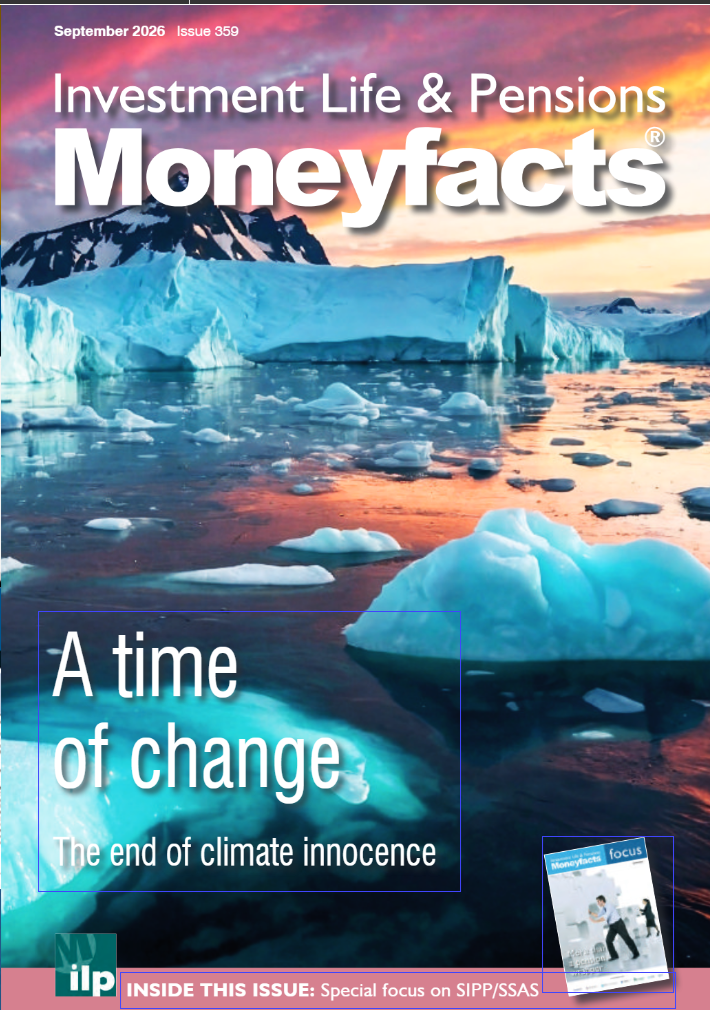
Writing during the 2026 summer heatwave and drought Julia Dreblow explores how UK attitudes to climate change may now be shifting…
Download the article as published in ILP Moneyfacts September 2026: p10-11 end of climate innocence article sept 26
Download full Investment Life and Pensions Moneyfacts magasine here
Article text, as published, is reproduced below:
===
The end of climate innocence?
Julia Dreblow considers whether the views around the ongoing impact of climate change are maturing
With the UK experiencing five heat waves over the last three months, no rain across most of the country for two months, over 1300 fires, collapsing crop yields, healthcare services struggling, hosepipe bans and an estimated 2,877 additional deaths (UK HAS report, 30 July) – might our collective understanding of climate change have started to mature?
Opposing forces may remain strong for a while yet, and there is a risk that this summer’s weather could send the anti-net zero movement into overdrive, leaving some vulnerable to Wizard of Oz style reassurances.
My sense, however, is that even though media commentary often fails to make it clear that our climate is changing because we have been burning too much fossil fuel for too long people are generally a little wiser and more resilient now – as we have moved from horizon scanning to lived experience.
As well as being fearful, many are also aware that this is not just a UK problem, hence the rise in ‘coolcations’ – holiday makers travelling to escape heat.
So, might it now be easier for governments and policy makers to act on scientific evidence without having to balance the demands of vested interests? I hope so.
Memories can be short, but the impacts of this summer will not vanish overnight. Poor crop yields are likely to increase food prices and calls to protect people from soaring temperatures in their homes will persist. Likewise, pressure on water companies to build reservoirs and fix leaks is unlikely to end any time soon. And then there’s nursing homes and maternity wards…
ONS research tells us that the cost of living and the NHS are more front of mind for most people than climate change – but their connection has sadly become far clearer this year.
Indeed, the media has done a good job showing us that the UK’s infrastructure is not designed for today’s climate. Few mention the Climate Change Committees report ‘A Well-Adapted UK’, published in May this year – although some of the CCC’s statistics are now familiar. For example, the report indicates that up to 92% of UK homes are now prone to overheating (health risks), peak river flows may be up to 45% higher and lasting longer (flood risk), and that water shortfalls in the UK may reach five billion litres per day by 2050 – as global temperature increases head towards +2°C.
Awareness raising
Some are making ever greater efforts to inform the public. The National Emergency Briefing film the ‘People’s Emergency Briefing’ – that we will show at our annual conference on 1 October – brings the interconnectedness of issues together well.
The film was collated following an expert briefing to MPs in 2025 – chaired by Professor Mike Berners-Lee and opened by broadcaster Chris Packham. It is primarily a call for transparency.
The film explains risks associated with and relating to the interconnectedness of extreme weather, food security, health, nature, national security, energy transition, tipping points and economics.
It concurs with recent episodes of ‘The Rest is Politics’, where Caroline Lucas discusses, for example, ‘When Nature Becomes a Security Threat’, with a senior security expert (Arthur Snell) and a senior British army officer, (Lt General Richard Nugee). In brief, these are military experts explaining when they realised the potential enormity
of environmental crises (eg extreme heat, lack of water), and why they are now raising the alarm.
The role of investors
The investment community has certainly deserved some of the criticisms that have come our way recently. But it does not have to be that way. Many investors focus on holding useful companies and assets that are developing or provide solutions to climate related challenges.
I’d encourage investors to remain humble, however. Financial markets matter, but we supply capital not diggers, water, care homes or food. We rely on others – as others rely on us.
The opportunity for spelling this out more clearly might now have opened up, in the UK and Europe at least.
Regulatory interventions
The UK regulator has done much to improve client confidence in sustainable investing recently, for example with the anti-greenwash rule, fund labelling and increased disclosures. That work is, in my view, imperfect in part because of the costs involved – although it continues to be refined.
A topic for another day perhaps – but broadly I believe we should now aim to make it more expensive to do, or ignore, harm than to try help address environmental and social problems. And in both situations – and everything in between – clients should have access to reliable information.
Beyond that, I welcome other work that is being carried out as the FCA has a range of climate initiatives and committees. On 4 August 2026 for example they published information on ‘Climate Adaptation and Resilience’, quoting Environment Agency research that estimates 6.3 million properties in England are now at risk of flooding. This is important information for investors and advisers.
The UK does not operate in a vacuum of course, so US geopolitics are also relevant, and of concern. Some fear concerned investors are being silenced and or shackled by the courts and others. There is much coverage of this online. Minerva Analytics (a Solactive company) often share interesting observations.
The role of intermediaries
There is a lot of talk about the need for adaptation, and improved resilience in the climate and nature sphere. Financial services is, in my view, no different. Processes can and should be adapted to respond to new realities, and where possible we should try to help make client portfolios more resilient – not that we can protect them if things go very wrong.
So, at a time of heightened public understanding of climate and nature risks, now may be a good time to talk about both the causes of climate change, and why people might like to hold investments that encourage improvements and or invest in assets that lead or support the shift to renewable energy, energy efficiency and improved infrastructure and services.
If this summer does indeed turn out to be the coolest we will experience from now on – we will need such companies to be on top form.
The Adviser Sustainability Group report that I have been working on (at the request of the FCA) for nearly three years, is not yet published so I cannot share our final tips and recommendations yet. So, I will finish with some long-held beliefs that I am confident will benefit advisers and wealth managers now more than ever:
- Discuss this area with clients, document your conversations, and stay up to date. It is not an intermediary’s role to convince clients about anything – but facts should be presented so that well informed choices can be made. In some instances, this will require an awareness and acceptance of complexities and imperfections – in order to avoid greenwash risks.
- Share positive stories. Many research sources (discussed previously) tell us that around 70% of people care about the environment and social issues and right now people are likely to be extra concerned. Positive stories include the UK’s potential to be a force for good in investment markets. We have high standards and the UK remains keen to lead in this area. The energy sector has also changed dramatically in recent years.
For example, the Office for National Statistics estimated there to be 652,000 full time equivalent jobs in UK green industries in 2024, an increase of over a quarter since 2015 (published in March 2026). By contrast, a recent UK parliamentary committee reported the oil and gas sector directly employs 26,000 jobs, and supports a further 95,000. Carbon and methane aside – one is a growth story – the other is not.
- Offer recommendations that are suited to individual needs. Whether you are considering active or passive options, managed portfolios or bespoke solutions, investments should be forward looking and responsive to changing realities. Strategies and opinions vary greatly but there are plenty of ways solutions can be crafted to meet client need. Our free tool, Fund EcoMarket, has over 200 filter options, for example.
So while the science may be relatively static it seems likely to me that public opinion may well now shift considerably thanks to lived experiences.
And as much as we might like to, we cannot click our heals together to travel back to safer, more innocent times. That time has passed. We have changed the climate, and the next year may be even tougher if the El Nino predictions prove to be correct.
The age of climate adolescence may now be upon us. Emotions may run high and there may be some slamming of doors, but that won’t change the composition of the atmosphere – or the need to think and act differently from now on.
Sources
https://committees.parliament.uk/work/9414/managing-the-future-of-uk-oil-and-gas/
https://www.ons.gov.uk/economy/environmentalaccounts/bulletins/experimentalestimatesofgreenjobsuk/march2026
www.fundecomarket.co.uk
Julia Dreblow, Founder SRI Services and Fund EcoMarket Vice chair of the FCA established Advisers’ Sustainability Group and DLAG member